
Why a Master's Degree in Education Technology?
Digital tools have reshaped every dimension of learning — from primary classrooms to corporate training floors. Across Europe, universities have responded by building rigorous postgraduate programmes that combine pedagogical theory with hands-on technology design. Whether you want to develop adaptive learning platforms, lead e-learning projects, or research the cognitive science behind educational games, a master's in Education Technology can open that path.
The seven programmes profiled here span six countries and range from research-intensive degrees to professionally oriented tracks with extended industry internships. Together they illustrate the breadth of what the field now offers.
- FinlandUniversity of Oulu — Learning, Education and Technology (LET): self-regulation, collaboration, technology enhancement
- Russia (East)Far Eastern Federal University, Vladivostok — information systems design, IT product development, industry practitioner involvement
- SpainUniversity of La Laguna — Education and ICT: virtual environments, educational software, digital content design
- PortugalViseu School of Education — Education and Multimedia: ICT integration, school project management, learning environment evaluation
- SwitzerlandUniversity of Geneva — Science and Technology of Learning and Training: e-learning management, educational video games, user-centred design
- FranceCRI Paris — AIRE EdTech Master's: digital transformation, open innovation, three industry internships in year two
- Russia (North)Northern (Arctic) Federal University, Arkhangelsk — Information Technologies in Education: ICT implementation, innovative programme design
University of Oulu, Finland — Learning, Education and Technology
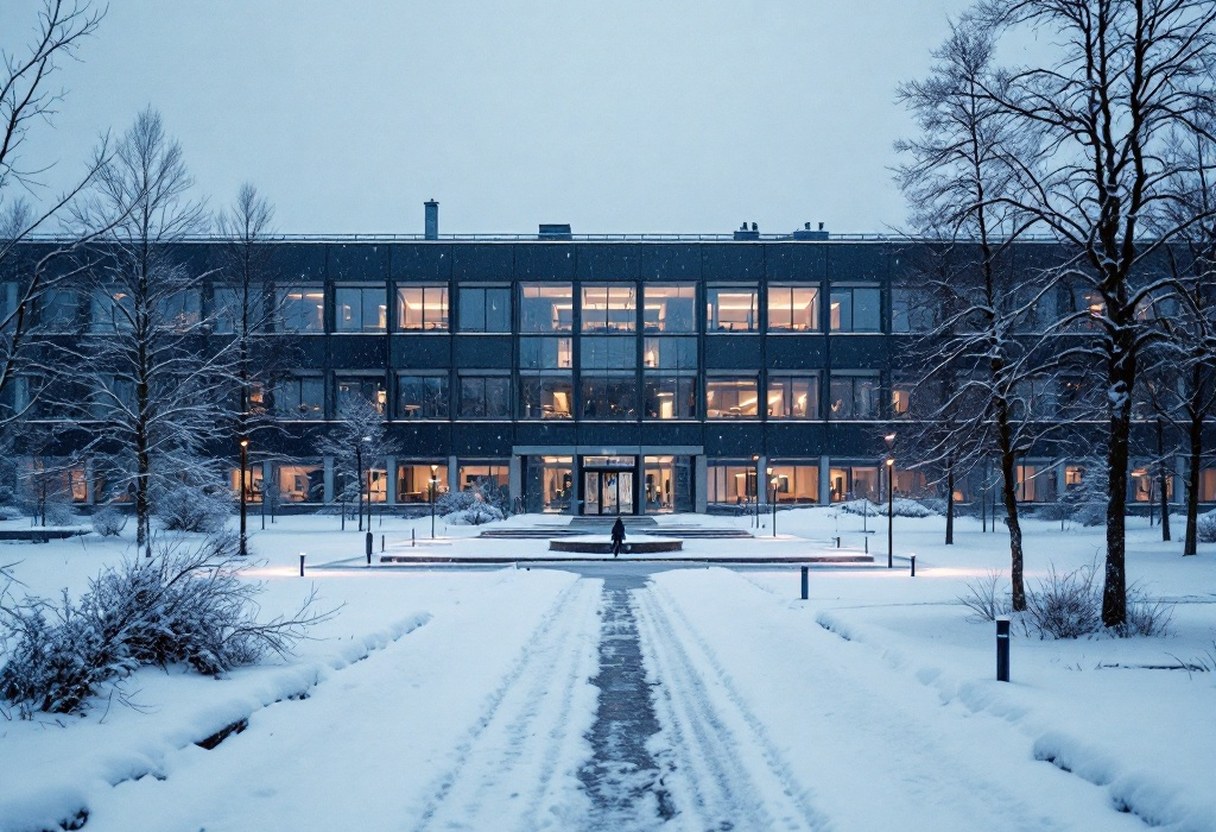
University of Oulu, located in Oulu, offers a two-year international Master's programme called Learning, Education and Technology (LET). The curriculum rests on three theoretical pillars: self-regulation, collaboration, and technology enhancement. Students develop the knowledge and practical skills needed to design, conduct, analyse, and evaluate tools for technology-based education.
LET graduates can work collaboratively within educational communities, apply learning theories to real settings, evaluate the pedagogical potential of different technologies, and design their own technology-enhanced learning platforms. Career pathways are broad — from classroom educator to human resources developer to educational administrator.
Far Eastern Federal University, Russia — Information Systems and Technologies
Far Eastern Federal University, based in Vladivostok, combines fundamental theoretical grounding with strong practical training in information systems and technologies. The programme prepares specialists to design, develop, and maintain new information systems, and to integrate IT products into contemporary organisations.
Graduates leave with competencies ranging from problem-solving using modern automation tools to organising and conducting scientific research. A notable feature is the faculty's active engagement of leading researchers and industry practitioners alongside modern computing infrastructure — giving students direct exposure to how digital technologies are applied in real enterprise and educational contexts.
University of La Laguna, Spain — Education and ICT
The Master's Degree in Education and ICT at University of La Laguna, La Laguna, trains experts with advanced knowledge and skills to investigate and innovate across teaching and learning processes. Graduates in Pedagogy, Social Education, Psychology, Communication, or Computer Engineering can use this programme to specialise in the academic and research dimensions of education technology.
The curriculum reflects a landscape in which concepts such as virtual learning environments, edublogs, e-portfolios, educational apps, and personal learning environments are already everyday realities in schools and universities. Students learn to design educational software, produce digital content, manage ICT innovation projects in formal institutions, and develop online teaching materials.
Viseu School of Education, Portugal — Education and Multimedia
The Viseu School of Education, situated in Viseu, Portugal, aims to train specialists in ICT and multimedia applied to education and professional training. Its Master's Degree in Education and Multimedia focuses on ICT integration in educational design — students build skills to design, implement, and evaluate learning environments within a genuine curricular context.
School project management is central to the programme. Graduates are equipped to manage ICT projects for schools, develop their own educational programmes, support both students and teachers in using digital resources effectively, evaluate existing processes, and propose evidence-based improvements. The degree sits firmly within Educational Sciences and Educational Technology, with a particular emphasis on educational communication and the intelligent selection of teaching resources.
University of Geneva, Switzerland — Science and Technology of Learning and Training

The University of Geneva offers a Master's degree in the Science and Technology of Learning and Training. The programme trains students to deploy technologies in education while focusing on the analysis and design of computer-based learning environments and the management of e-learning projects.
A distinctive element is a dedicated module on Educational Video Games — reflecting the university's recognition that game-based learning has moved firmly into mainstream pedagogical research. Other core subjects include ICT-mediated communication, e-learning, user-centred design, ergonomics, and research methodology in educational technologies. Graduates can pursue careers in multimedia development and design, or work as consultants training educators in the effective use of digital learning resources.
Centre for Research and Interdisciplinarity (CRI), France — AIRE EdTech
The Centre for Research and Interdisciplinarity (CRI), based in Paris, runs the AIRE EdTech Master's programme, which focuses on the digital transformation currently reshaping education. It trains teachers, researchers, and entrepreneurs to design and build the educational environments of tomorrow, grounded in the principle that learning resources should be openly accessible everywhere.
The programme is structured around a progressive two-year model:
- Year one, semester one: Students choose five courses from a menu that includes cognitive science, educational games, learning by doing, new technologies for knowledge creation and sharing, open science and open innovation, pedagogical innovation, and scientific communication.
- Year one, semester two: A five-month internship, supplemented by weekly lectures.
- Year two: Three three-month internships, alongside weekly sessions on innovation, analysis, and educational project design.
The heavy internship load makes this programme especially well suited to students who want practical entrepreneurial experience embedded in their academic study.
Northern (Arctic) Federal University, Russia — Information Technologies in Education
Northern (Arctic) Federal University, located in Arkhangelsk, offers a Master's degree in Information Technologies in Education. The programme targets the development of highly qualified specialists in the computerisation of education — professionals capable of developing, implementing, and supporting information systems across a variety of educational settings.
Graduates are equipped with a specific and deployable skill set:
- Using software tools for educational purposes
- Implementing digital technology in learning environments
- Developing original educational programmes
- Building coherent relationships between ICT infrastructure and educational practice
- Designing projects using information technology
Choosing the Right Programme
The seven programmes profiled here differ meaningfully in their emphasis. Oulu and Geneva lean toward research and cognitive theory; Viseu is strongly practice-oriented with roots in classroom ICT integration, while La Laguna emphasises the academic and research dimensions alongside applied ICT innovation; CRI Paris prioritises entrepreneurial project-building through sustained industry exposure; and the two Russian institutions offer deep technical grounding in information systems alongside pedagogical application.
Prospective students should consider not only academic content but also language of instruction, industry connections, internship structures, and whether the programme sits closer to computer science or to educational sciences — because that orientation shapes both the curriculum and the careers that follow. What all these programmes share is a conviction that designing effective digital learning is a discipline in its own right, demanding the same rigour as any other branch of applied research.